Showing posts with label food. Show all posts

Monday, June 27, 2011

Food of the Gods (and Goddesses)

Figs!
Suddenly, I have a bumper crop of fichi (figs) on my hands. I've never had fresh figs before, and with such a quantity, I've been doing research to find some recipes that don't involve using them for jam or desserts. To my delight, I've found many that pair figs with prosciutto or cheese, and suggest using them in salads and on pizza.

Did you know that the fig is one of the first plants cultivated by humans? Fig fossils dating back to 9400 BC prove it! It's even believed that they could have been planted and cultivated intentionally, one thousand years before wheat and rye were domesticated. Figs also served as a common food in Roman times. And as for nutrition, figs are one of the highest plant sources of calcium and fiber. But they also have a laxative effect, so it's best not to eat many at one time.

(postscript: later, I learned that this crop of figs is basically of no value. Usually, they drop to the ground and are not used. In September, the sweeter figs arrive, the settembrini, which are much juicier and sought after.)

I have some other beauties in the yard, including melagrana (pomegranate), which are just starting to form their fruit, as shown below.

I neglected the carciofi (artichoke), but now have a lovely plant to watch as they go to seed.

And these aren't plants, but I enjoy their shape: demijohns once used to store wine, that were rescued from rubbish bins.

Friday, June 24, 2011

Albicocche, Prugne e Zanzare

plums, apricots, pine nuts

Oh, how Italians love their fruit! And it's no wonder, as something is always in season, and you make the most of each fruit as it becomes available, so luscious and fresh from local vendors. Fruit is often eaten as a dessert, both at il pranzo (lunch) and la cena (dinner), and I heartily enjoy this habit. My Italian friends all relish eating fruit and vegetables (as do I), a habit that is sadly missing from the American diet. It seems that in the States, we have to bribe our children to eat their fruits and vegetables, while they are prized foods in the Italian home, starting from infancy. I think a lot of it has to do with the fact that fresh fruit is delicious and is readily available in Italy most of the year. We don't have access to fresh fruit many months of the year in Kansas, and eating fruit that has traveled many miles just doesn't have the same quality of flavor.

Over the past few days, it's been heating up, into the 90's F (30's C), and the plum tree near the patio has been dropping fruit nuggets in the yard. They're quite small, and it feels like an Easter egg hunt to look for them in the leaves beneath the tree. In the photo above, you can see today's stash of le prugne (plums) from the back yard and gli albicocche (apricots) from the neighbors. Next to the basket is a pine cone from the Pino marittimo, or Maritime Pine, which gives us pine nuts (used to make pesto), covered by a hard brown shell. I've tried cracking a few of them, and it's hard work! Now I know why they cost so much.

Along with the heat come le zanzare, the mosquitoes that will plague Italy until it freezes in the fall. Purtroppo, unfortunately, the little buggers love to bite me, so if I want to have any kind of ventilation in the house, I have to use a mosquito zapper, starting in the late afternoon and continuing until morning. Window screens are not usually included in Italian houses, so mosquitoes have free entry whenever the windows or doors are open.

To ward them off, I use a handy little zapper that plugs into the wall. You slide a small pellet into the round ball, and it heats the pellet, perfuming the air with something that keeps mosquitoes at bay. A pellet lasts for 12 hours, and I've been using one every single day.

Tonight there's a fresh breeze in the air, and it's calling me outside for another long walk.
Buona sera! (Good evening!)

Thursday, June 23, 2011

Lemon gelato and Licorice sticks

A new cheap thrill: Lemon bars with licorice sticks! When I recently visited a friend in Ostia, he took me to a gelateria that serves liquorizia, or licorice-flavored gelato. I was told that the perfect complement to licorice is lemon. Who knew? I love licorice, but I didn't much care for the blend of flavors at that gelateria: the licorice overpowered the lemon. But the idea intrigued me, and when I came across another frozen dessert combining licorice and lemon, I had to try it.

Limoriz is a frozen gelato lemon bar with a licorice stick instead of the usual wooden stick in the middle of the bar. So when you're finished with the lemon bar, you still have another treat. I love it! It's my favorite new Italian dessert. And it's easy to keep them on hand in the freezer.

The cherry season is waning, but now there are fresh apricots and plums hanging from the trees. Claudio and Mariela gave me a fresh supply of apricots this week, in thanks for the kilo of cherries I gave them a few weeks ago.

It's heating up all over Italy, but it stays cool in the house, where I spend many hours working online right now. In another week, Deborah returns from Canada, and I'll be off to visit friends in Northern Italy. I'll be going to Verona, Trento, Padova, Venezia, Modena, either Parma or Cremona, and Firenze before heading back to Zagarolo at the end of July.

Thursday, June 16, 2011

Romans come to visit

fMy friends Lidia and Carlo came to spend the day with me, so I took them to Castel San Pietro, which they'd never seen before, though they've lived only 18 miles away for most of their lives. It was fun to their tour guide, for a change.

It was the perfect day, still cool, but sunny. If you'd like to know more about this charming village, I've written previously about it here:

castel-san-pietro-romano

When we got back to the house, I fixed gnudi again, and they pronounced my efforts Buonissimi! Squisiti! (= YUMMY) High praise coming from a great Roman cook and two Romans who are used to eating good food. After their comments, I feel more confident about my attempts to cook Italian for Italians.

Wednesday, June 15, 2011

A visit to the Cantina

Me and Marvi

After our trip to Tivoli, we stopped in at Cantina del Tufaio to visit the real cantina (wine cellar) where the white wine is stored. The cantina was dug out of the tufa rock by Claudio's grandfather in 1850, and serves as the perfect cooler to store the wine while it ages.

The stairs down to the cantina

Claudio explains the storage of wine

Sharing a toast with the new Spumanti

After visiting the cantina, we sat under the pergola on their patio and tasted a new bottle of their Spumanti, along with ciambelle (cookies made to be eaten with wine), bread and last year's olive oil. One of Claudio's winemaking friends stopped by to have his wine "tested" by Claudio, and we all had a glass of that as well. Since everyone was Italian but me, as the conversation sped up, it quickly moved beyond my comprehension level. But I enjoyed the chance to while away the afternoon with several groups of friends, brought together by yours truly!

A view of the pergola

Sunday, June 12, 2011

A gift and guests from Modena

Fountain of the Nymphs, Piazza Repubblica, Roma

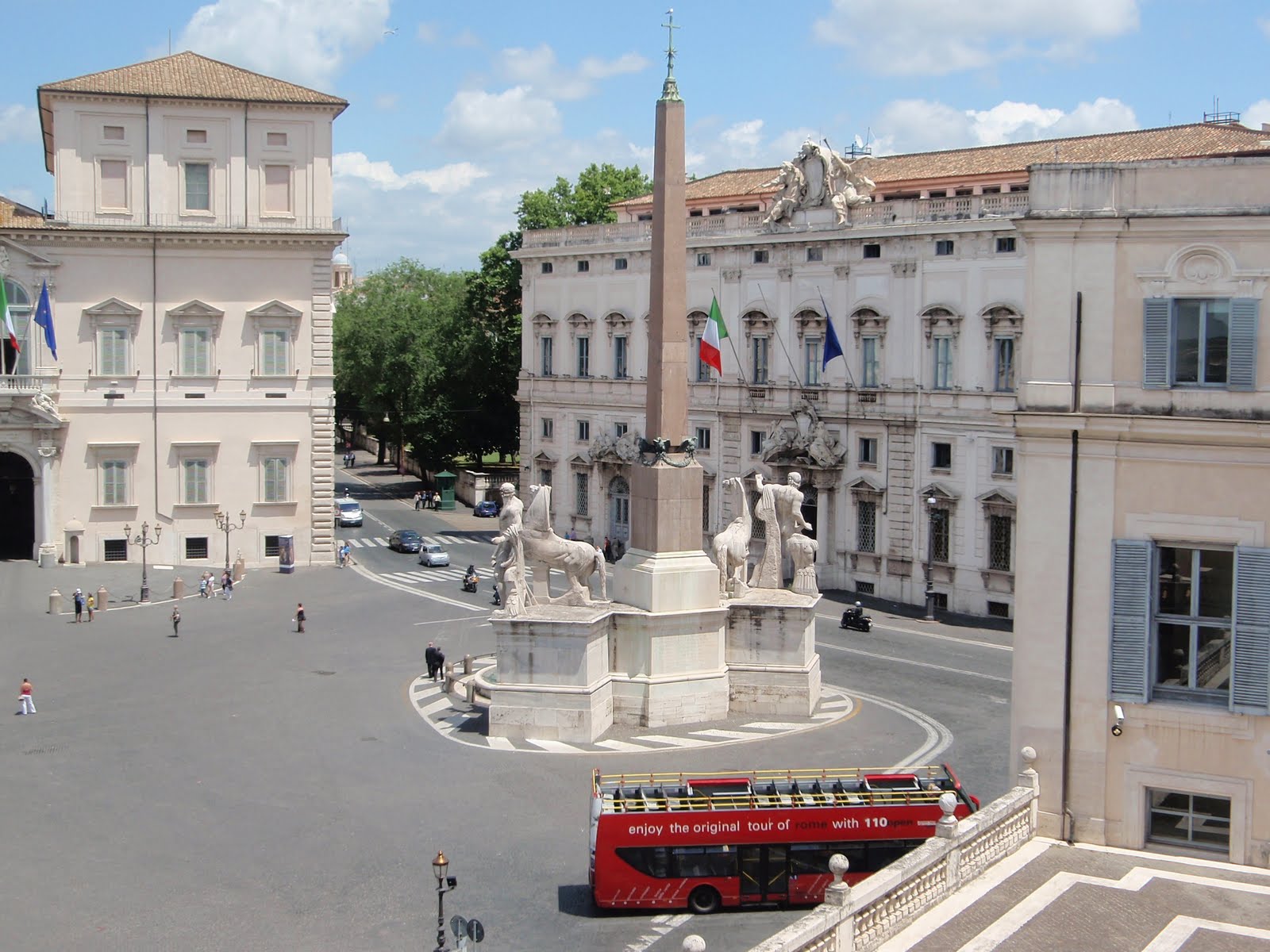
This week I had visitors from Modena: Marco and Marvi came to spend a few days with me in Zagarolo. I met them in Rome at the Termini train station, and we headed down via Nazionale and over to the Scuderie del Quirinale to see an art exhibit by Lorenzo Lotto. (Across the piazza is Palazzo Quirinale, the official residence of the President of the Italian Republic, currently Giorgio Napolitano.)

Piazza del Quirinale

I was not familiar with the artist Lotto, originally from Venice, who was considered eccentric and independent from his cohorts, who included Bellini, Rafael and Bramante. Due to recent restorations of his work, the colors were vibrant, and I found the exhibit to be powerful and impressive. For more on Lotto, click this link:

Lorenzo_Lotto

After the exhibit, we took a taxi over to the Pantheon, asking the taxi driver for suggestions as to where we could eat a good Roman meal. Bypassing the outdoor cafes catering to tourists, we had a wonderful lunch on a side street near the Pantheon. Then we walked over to the Trevi fountain and Piazza Navona before making our way back to the train station.

Bougainvillea viewed in Piazza Navona

When we returned to Zagarolo, after giving a tour of the house and yard, I made my new specialty, gnudi for la cena (dinner). It turned out quite well! And for dessert, a special Cherry-Olive Oil Polenta cake that I'd made in honor of Marco's upcoming birthday.

I was pleased to have Marco and Marvi as my first guests in Zagarolo, and look forward to spending several days showing them around my new home in Lazio. And lucky me! Marvi brought with her a small bottle of homemade aceto balsamico (balsamic vinegar), made from the family's 30-year-old store of grape must. For those who don't know, Modena is famous for its balsamic vinegar, and the best variety, aged at least for 20 years, is expensive. Most versions of balsamic vinegar in the U.S. have little relation to the real stuff. 

The History of Balsamic Vinegar

Balsamic vinegar is today used in numerous recipes all over the world. The tangy sweet and sour flavor of balsamic vinegar gives a marvelous finish to gourmet delicacies. Having its origins in the Emilia-Romagna region of Italy, balsamic vinegar has found its way into the smallest of home-kitchens as well as the trendiest of restaurants. One finds the shelves of supermarkets stocked with various brands of balsamic vinegar each claiming their own superiority. An average customer is unaware of the fact that authentic balsamic vinegar is very difficult to come by. Most of the commercial varieties available in the markets are manipulated versions or imitations. It would therefore not be surprising if we say that most people have not even tasted authentic balsamic vinegar.

Thirty years ago true balsamic vinegar, (or in Italian) “aceto balsamico tradizionale,” was relatively unknown outside of villas of Italy. Till this time, its production was restricted to the wealthy families in the small towns of Modena and Reggio in the Emilia-Romagna region, just west of Bologna. They had been making the condiment for nearly a thousand years but catering only to the requirements within the family. They would stock supplies for several years and pass on to the next generation as heirlooms. It was also a prestigious gift given in small vessels to close friends or bequeathed to daughters as a portion of their wedding dowry.

Grazie a Marvi! Now if I can only get the bottle home to Kansas without breaking it!

Thursday, June 2, 2011

Cherries galore!

June 2, Festa della Repubblica


Though today was a holiday in Italy, as Italians celebrated the 65th anniversary of their independence day, it was just another day for me. I'd been to Rome earlier this week, so decided not to hassle with the city scene. Instead, I spent much of the day picking, pitting and cooking cherries.

After four glorious but hectic days in Firenze, I was ready to come back to the tranquil setting in Zagarolo. I'm enjoying my time here more and more. One of my routines is to take an hour-long walk down a country road, with views of vineyards and hills in every direction. I can watch the changes in the vegetation, and was surprised this week to see how much everything had grown while I was in Florence. Wildflowers of all types, colors and sizes had popped out, including orange poppies, blue chickory, white Queen Anne's lace, and pink primrose. In the yard, other varieties of wildflowers are blooming, along with the oleander and pomegranate bushes. (yes, a pomegranate! It has bright orange flowers. Who knew?)

Cherry pitting

And the two cherry trees are loaded down with cherries. There seems to be no end to them! I've been picking about 4 pounds of ripe cherries every day for the past four days, and there's no end in sight. I've made several cherry cobblers, am planning to make a Cherry-Olive Oil Polenta Cake for friends who are coming next week, and tonight I'll try my hand at cherry jam for the first time ever. As for the rest, I'll probably freeze as many as I can for Deborah to enjoy when she comes back. I've also been eating them by the handful; they're just too good to pass up. However, many of them will go to waste, as the trees are too high for me to reach all the branches. When I took a tray of cherry cobbler to one of my English students, I returned with zucchine and gigantic mulberries from their garden. Nice trade!

A bounty of cherries, and cherry cobbler.

One of the best things about house-sitting, as opposed to renting, is that I have access to a fully equipped kitchen, complete with a cherry-pitter and all the other utensils I need to cook, bake, make pasta, jam or whatever else suits my fancy. However, there's no food processor, so I have to beat the cake batter and chop by hand, and I'll be using a mortar and pestle to make pesto when the basil is ready. And then there's the garden: I have fresh lettuce, arugula, artichokes, basil, and soon, tomatoes! I am so thankful to have such a lovely home in such a beautiful setting to take care of for several months.

Sunday, May 29, 2011

Firenze: Wild and Wonderful

Me with Walt, a friend from Kansas

When in Florence, I usually stay in a hotel near the train station, but after living in the centro storico, I wanted to find a hotel closer to my old neighborhood. My friend Haruko suggested one that her sister had stayed in, close to Piazza Beccaria, called Orti di Cimabue. I was very pleased with the hotel, the location and the price. As mentioned in my post about my birthday surprise, a young woman at the hotel played violin in the orchestra for the performance that night. Not only that, but when I told her it was my birthday, the next day I found a red rose in my room, along with birthday greetings. I've already decided to return to Florence at the end of my stay this year, and hope to return to this hotel.

Orti di Cimabue

Villa La Petraia

Medici Villas: Villa Castello, Villa La Petraia

One of my adventures while living in Florence last fall was to visit some of the Medici villas outside of the city, and I decided to return there this week, to see what was blooming. When I was there in the fall, there were only remnants of the flowers that had bloomed in the spring, and I envisioned a bountiful display in the right season.

I got up early and took a bus to the train station, where I caught another bus to Castello. (Number 28 and 2 will get you there, but the latter one has fewer stops.) I asked the driver if he stopped at the Villas, and he said yes, but neglected to let me know when we arrived, so I had a good walk back to them when I did get off. To my surprise, the parks looked much the same as they had last fall. I had missed the spring flowering season, and very little was in bloom that day. It was disappointing, to say the least. And since I have such a lovely landscape where I'm living in Zagarolo, I don't have the same craving for parks that I did while living in Florence last year. On the way out of the Villa Castello, I asked directions to the nearest bus stop, and discovered it was right near the entrance, which saved me a lot of unnecessary walking. For more info and photos on the parks, here's a link to the post I wrote last fall:

wandering-around-villas-and-gardens

While in Florence, I decided to do some research on gnudi: by that I mean that I went to several restaurants where I had eaten gnudi before, to see how it compared to the recipe I've been using. At the first restaurant I tried, I was appalled...only a bland taste of spinach was evident in the green blobs on my plate, along with heavy shavings of parmagiana cheese. The gnudi lay in a pool of butter, but there was no evidence of sage that should flavor the butter. The dish was so tasteless, I should have complained and sent it back. When I'd tried gnudi at that same restaurant last fall, it was very tasty.

Table settings at BRAC

The next day I went to my favorite restaurant in Florence, Libreria BRAC, which is actually a vegetarian restaurant in the vicinity of Santa Croce. The place also serves as a library, where one can read, write or use the wifi service. I'd first eaten gnudi there last fall, and it was exquisite. This time it was good, but not as good as the gnudi I've been making. SCORE! The ambiance at BRAC is creative and playful. This time they had a display of growing seeds on the tables, to smell, touch and taste, and when you paid your bill (very low prices!), you were given a sample of seeds to take with you.

\

San Lorenzo Market

When in Florence, I always find time to stroll through the San Lorenzo market, one of the best shopping markets in the world. I have several "favorite" vendors where I usually buy gifts, and get a discount each time for favoring them.

Babbit family on Ponte Vecchio

On Sunday, just before I left Florence, I spent a few hours with some friends from Lawrence who had come to the city for the day. They were spending a week in Italy and it was an odd coincidence that we would be in Florence at the same time. We only had a short time together before I had to catch my train back to Rome, but it gave me a rare chance to share my favorite city with friends from Kansas.

Saturday, May 14, 2011

I vespi ed i gnudi

Il cancello (the gate) in the alley.

Wasps and gnudi

Well, so much for help with the hedges. A young man had offered his help trimming the hedges, as I'm allergic to wasp stings, the kind of allergic that can be deadly. The hedges are covered with honeysuckle vine and other tasty flowers that wasps enjoy, so they've made nests in the greenery that lines the alley.

The long hedge in the alley that must be kept trimmed.
(The yard extends beyond the 2nd telephone pole.)

I was not looking forward to overseeing Mauro, as I wasn't sure he was eager to do the work. But when the appointed time came, he was a no-show. While I was waiting for him to appear, I started trimming myself, and made it through a third of the length of the hedge. Since it was early in the morning, the wasps were not active, and I had long sleeves, long pants, gloves and a hat on, just in case. I'm usually working in my yard at home this time of year, and I enjoy the satisfaction that comes from sprucing things up. After waiting 90 minutes, it seemed obvious Mauro was not coming. He called an hour later: "sorry, I'm not feeling well, maybe next week I can help you with the plants." I told him that while I was waiting, I started doing the work myself, and I could finish it without his help. And he needn't worry about coming in the future. I didn't enjoy waiting nearly three hours to learn he wasn't coming, and I didn't want to deal with that again. Too bad: he missed the chance to make 50 euros helping me out this month.

By that time, it was heating up, so I turned my attention to another task: making gnudi. I discovered gnudi (naked ravioli) last year at a restaurant in Florence. It was quite delicious and light, an unusual find in Italy, where heavy meals are more common. Considered a Tuscan dish, it is similar to the filling that is often used in ravioli, but with gnudi, there is no pasta.

Gnudi production

Basically, it's a mixture of spinach, ricotta, parmigiano, eggs, and spices, formed into balls and then boiled. It can be served with a tomato-based sauce or sage butter. There are many recipes available online, and I'm still learning the process myself, so I won't include the ingredients here. If you're curious, here's a basic version:

gnudi-recipe

I'd tried making gnudi several times at home, but both times they turned out too heavy, due to an excess of flour. Today I used ultra-fresh, locally made ricotta (from a dairy down the street!), and the mixture turned out much fluffier than before: a good sign. I only added a little flour this time and though the gnudi turned out nicely formed, they were a little bland. I'll remix it tomorrow, add a few more spices and see what happens. I'm hoping to master this dish while I'm here, so I can serve it to my Italian friends with confidence.

Thursday, December 9, 2010

Biscotti

Cranberry-Pecan Biscotti

In Italy, biscotti is a general term used to refer to many types of cookies, but in the States, we use this word for a specific type of hard cookie that is eaten with, or dipped into coffee. The word itself means "twice-baked," and biscotti have a long history in Italy. The city of Prato has the first documented recipe for biscotti, discovered in the 1800's, and Prato is usually credited as being the locale where biscotti originated. However, others say that a form of these cookies originated during Roman times: because they are very dry, biscotti can be stored for long periods of time and thus became an ideal food for soldiers, farmers and sailors, who were often on long journeys away from home. Regardless of where they originated, there are now many regional variations of biscotti in Italy.

I am making biscotti for the first time this week. I bought several packages of them at the store last week, and thought they would make an interesting gift. However, the flavor was so poor that I decided to try making them myself. Making biscotti has turned out to be much simpler than I had imagined, and the results are not only tasty, but it's very satisfying to be able to make my own gifts. I've now made enough for several gift baskets, and my son has asked me to make a batch to share with his co-workers.

While in Italy, I often bought cantuccini, a small almond biscotti that is usually served with Vin Santo, a sweet dessert wine. However, many kinds of biscotti go well with Vin Santo, and I was hoping to pair bottles of wine with the biscotti in my Christmas gift baskets. Unfortunately, I've run into some road blocks, as Vin Santo is not readily available here.

After calling around to many liquor stores in my town, I tracked down only two bottles of the wine, and each one cost more than $55! YIKES! In Italy, I could easily get a bottle of Vin Santo for less than 10 euros. They even stocked it at the mini-market near my apartment. I can order it online from New York, for about $20 per bottle, but I won't have time to do that for the baskets I'm delivering this week. Instead, I will add packets of coffee and hot chocolate to complement the biscotti in my gift baskets.

Now that I've had good luck with a few batches of biscotti, I'm eager to try more recipes, which are plentiful on the internet.

Sunday, October 17, 2010

Il cibo italiano: Italian food

There's no question about it: the temptation of delicious food is everywhere in Florence. Most of the time I'm able to resist, due to the cost of buying the food and the fear of gaining back the weight I've worked so hard to lose the past few years. It's a constant battle every day, especially in Florence, where pastry shops, gelato stores, restaurants and kiosks selling specialty foods are so prolific.

There's a pastry shop just next door, with freshly made creations displayed attractively in the windows everyday. I ate gelato often when the weather was warmer, but now that it's cooler, I'm not often tempted. However, with four gelato stores within a block of my apartment, and several along every street block, I can't escape the sight of people eating the stuff wherever I go. There is also a chocolate maker down the street, but I've been able to resist going into the store. Coffee is another Italian staple that I enjoy, but limit myself to buying it only a few times a week. Otherwise, I often fix a decaf version in my apartment.

A popular Florentine pastry is called schiacciatta, which is similar to focaccia. Schiacciare means to crush, so schiacciatta is like a crushed version of focaccia. There are many forms of it, with or without toppings. I like the plain, unsweetened variety most of the time. It's chewy and a little salty. At this time of year a special version of it, called schiacciata con l'uva is popular.


Schiacciata con l'uva is a dessert bread with peasant origins, cooked at the time of harvest festivals by farmers, which contains simple ingredients: bread dough, olive oil, sugar and black grapes. I've tried several versions of it this past week, and the best one, at the best price, is sold in a small shop across the street from me. It's quite delicious!

My meals are pretty simple fare most of the time: cereal or egg for breakfast; salads, cheese, fruit and foccaccia for lunch; chicken and roasted vegetables for dinner. I often make insalata caprese for lunch, with buffalo mozzarella (soft and chewy, made from water buffalo milk in Southern Italy), tomatoes, basil and olive oil. Once a week I prepare store-bought tortellini or ravioli stuffed with ricotta cheese and spinach or pumpkin, and serve it with pesto sauce. I drink wine now and then. Pretty boring, eh?

Unlike most people who travel to Italy, food is not a main focus of my time here. I like to try things, but don't want the expense of eating out nor the probability of gaining weight that comes with enjoying Italian cuisine to the hilt. I'm not a great cook at home, and don't expect to be one here, but I enjoy eating at the homes of my friends and learning about Italian cooking from them.

But I must admit I have my indulgences as well. I often eat cookies with tea in the evening, my favorite is chocolate and hazelnut flavored. Another specialty, cantuccini, is an almond-flavored biscotti that I enjoy on occasion. It is often eaten with a small glass of vin santo, a sweet dessert wine. It would be fun to try a bit of everything, if only...

Harvest time brings many special foods, food festivals (called sagras), and vendors selling their wares. It's chestnut season, and roasted chestnuts are starting to be sold on the streets of Florence. Every small town has some kind of sagra to celebrate the local harvest. I'm hoping to go to a chestnut festival next weekend and a truffle festival soon after. And then there's the Eurochocolate Festival in Perugia this week. Will the temptations never end?

---
I have a new respect for Mercato Centrale, which I previously panned. I strolled around this huge indoor market today and could see its many attractions: free samples, freshly made pasta, and many prepared foods that you can heat up at home. There are also numerous bins of nuts, spices, dried fruits and long displays of wines, olive oils and balsamic vinegar. Not to mention that this is one of the best places to buy fresh meats, cheeses and fish. It's certainly an important part of the Florence scene.

Monday, October 4, 2010

Visiting Vinci

I had another busy weekend, walking from one end of Florence to another and back again, then heading out to Leonardo da Vinci's home in nearby Vinci.

On Saturday, I decided to challenge myself by going to Parco delle Cascine, on the other side of town. I walked and walked, took a bus and walked some more, and finally arrived at my destination, a huge park along the Arno river.

I went to see an exhibit called Ruralia, a Festival of Florentine Agriculture, which is similar to the county fairs back home. Many vendors were there to sell homegrown/homemade jams, honeys, produce, meats, cheeses, wines and olive oil.


There were also petting zoos, horseback riding, displays of live farm animals and stuffed wild animals, mushrooms, truffles, etc. I bought some fresh pecorino cheese and Finocchiona, a type of salame made with fennel seed that I discovered I liked earlier this week in Chianti. I also found a tin of Chianti Classico olive oil that will be safe to bring home in my suitcase. Over 100,000 people attended the 3-day event.

On the walk back, I discovered that Florence's tram line runs through the park, and using the still-valid bus ticket I'd bought earlier, I took the tram back to my side of town. Sure am glad I didn't have to walk! Later I met with a new conversation partner that I'd met through the Paperback Exchange store that I frequent, and we walked around the centro storico and talked for several hours. It will improve my Italian to have a fiorentina (Florence native) to talk with while I'm here.

On Sunday, Massimo, Sofia and Erika drove down from Bologna to spend the day. I met them at the Sant'Ambrogio parking lot near my apartment, and we walked down to Palazzo Strozzi to see an art exhibit: Bronzino: Artist and Poet at the Court of the Medici, which was quite impressive. I did not know much about the artist previously, but really enjoyed the exhibit. To learn more, click here: Bronzino

Sofia had made fresh tortellini, and brought me some, which was a wonderful surprise. I'd been able to watch part of the tortellini-making process while talking to Massimo on Skype the night before, so was thrilled to be able to taste it. I can't wait to fix it for dinner tonight!

Sofia's homemade tortellini

After the Bronzino exhibit we walked around the centro storico to see the Duomo and Piazza Signoria, then made our way to Piazza Santa Croce, where an International Festival was taking place, with many vendors from all over Europe: cheeses, chocolate and lavender from France, bulbs from Holland, meats from Germany, and much more. Sofia and I bought some cyclamen plants from Holland, for only 1 euro each. We stopped to eat lunch at a German food vendor that featured grilled wurstel.

After our meal, we headed back to their car and drove west, into the hills outside of Florence. We made our way to Vinci, where there are several museums devoted to Leonardo da Vinci's inventions.

Museo Leonardiano

We saw many models of his machines, and climbed a tower to see a panoramic view of the area.

Vinci is a lovely town, surrounded by vineyards and olive groves, heavy with fruit. We also noticed pomegranate trees laden with ripe red globes.


After the museum, we drove up the hill to a smaller town, Anchiano, where Leonardo was born, to visit his family home.

It's hard to imagine how he was able to master so many fields of art and science, but there's no doubt he's left an indelible imprint in history.

Sofia walking in the olive grove near Leonardo's home.

It turned out to be a great day for a drive through the hills west of Florence, e sono molto grata (and I'm very grateful) to Massimo, Sofia and Erika for making the trip possible.

Saturday, September 18, 2010

Bellezza e Bruschetta

Bellezza (beauty) in Piazza Duomo

I had a mission today: to make bruschetta for the first time, and pesto. I've made pesto many times at home, but as I only have knives on hand in the apartment to slice and dice (no food processor), it was a challenge. Bruschetta is bascially grilled bread, often topped with chopped tomatoes, spices and olive oil. Pesto is a blend of basil, garlic, olive oil, pine nuts and parmesan cheese, also used as a topping, or as a sauce on pasta.

Bruschetta

First, I needed the right ingredients. I had basilico from the plant on my terrace, pomidori (tomatoes) and aglio (garlic) from the market, as well as olio d'oliva (olive oil) and Parmigiano Reggiano (parmesan cheese). I still needed pane (bread), spezie (spices) and pinoli (pine nuts). I went to the Mercato Centrale early to see what I could find. Shopping in Firenze is often like a scavenger hunt, and I enjoy the process of exploring the city to figure out where things can be found.

As a rule, I don't much care for Mercato Centrale, as many of the merchants are not Italian and the prices are often steep, plying to the tourist trade that frequents that part of town. The only thing I bought was some ground pepper, for 2 euros. The woman who sold it to me encouraged me to try a tiny bottle of salt flavored with truffles....for 9 euros. No thanks! (The non-Italian merchants often try to push the sale of other items in their stalls, something I really don't enjoy.)

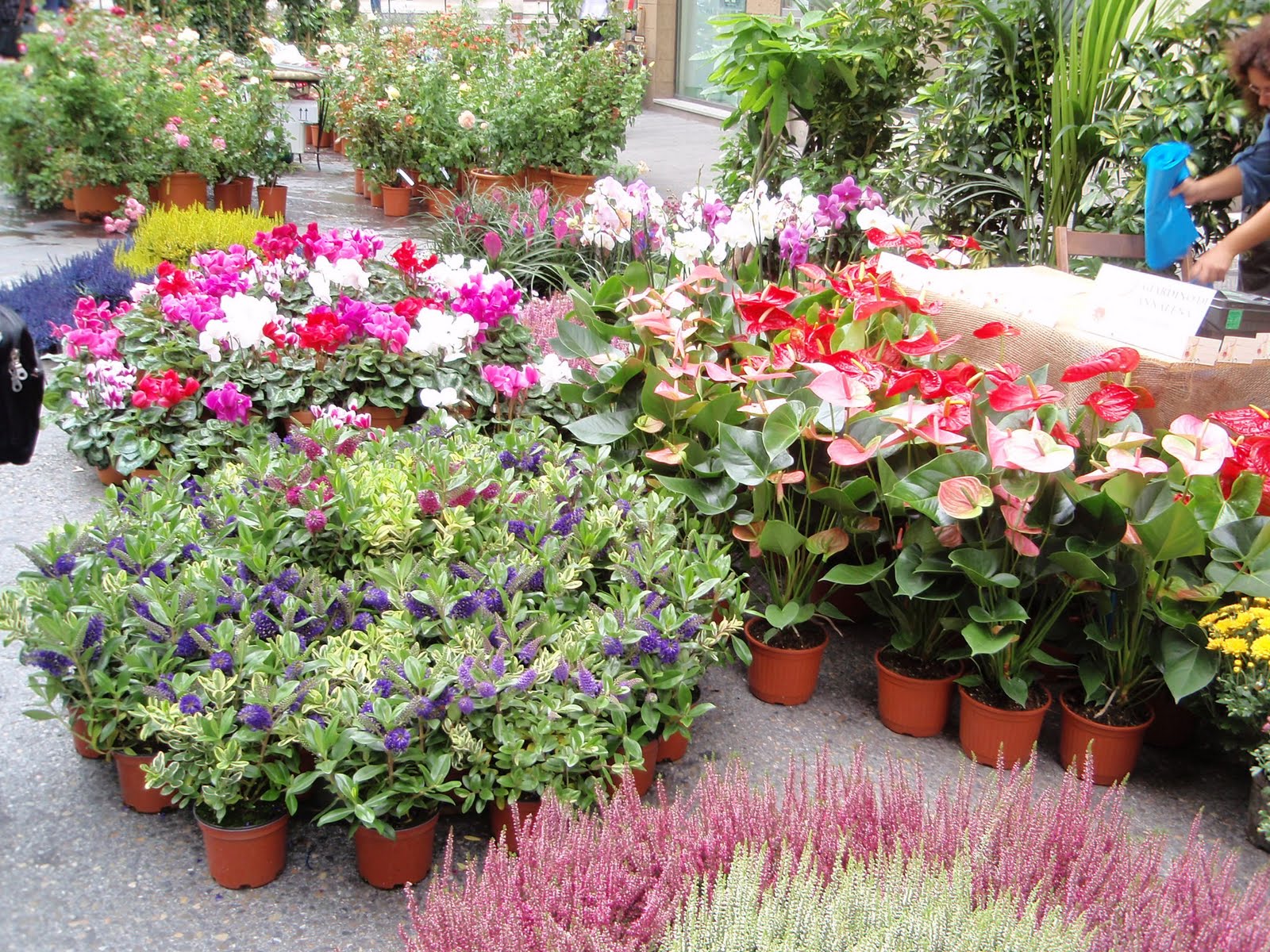
On the way, I came across a special exhibit of ornamental plants in Piazza del Duomo. Many merchants had colorful of their plants on display. I lingered awhile to capture the beauty.


I was unlucky in finding pine nuts at the market, but when I ventured into a casalinghe store (things for the home), in addition to pots and pans, I discovered bins of dried beans and jars of nuts. I asked for half of an etto (about 2 ounces) of pinoli, for 2,90 euros, and the merchant was content to sell me that and no more. Grazie mille!

Still in a walking mood, I made my way across town to my favorite market, Sant'Ambrogio, where I prefer to shop. I found the bread I needed and returned home per fare pranzo (to make lunch).

Slicing il prosciutto (ham) while I wait to buy bread.

I grilled the bread in the toaster oven, then slathered it with the tomato concoction I'd made. I had a few tomatoes left over to eat with the pesto. L'ho fatto! (I made it): bruschetta e pesto! The perfect pranzo for a Saturday afternoon in Firenze. Buon appetito!

Monday, September 6, 2010

Going to market

I really lucked out. I think I live in one of the best parts of Florence. I enjoy being able to walk to the market each day for fresh fruit and vegetables, so much more flavorable than even the homegrown vegies we had in Lawrence this year. I've become a big fan of the small pears that they sell here...the perfect size for a snack with cheese.

I rarely spend more than 5 euros, yet come home carrying bags laden with riches: zucchine, peppers, grapes, olives, melon, tomatoes, buffalo mozzarella, figs, pears, and more. There is also freshly made pasta, meats, cheeses, lettuces at the mercato aperto (open market) ; too many things to recount with ease.

La frutta e verdura dal mercato
(fruit and vegetables from the market)

And then there's the indoor market, with every imaginable kind of fresh fish, meat or cheese. There's even one counter that sells only cuts of horse meat, often eaten in Italy. I'm not a big meat eater, so don't usually frequent this part of the Sant'Ambrogio market, but it's a hopping place with the locals.

One of my Skype friends, Massimo in Bologna, gave me several lessons on shopping at the market during our language exchange meetings this summer. It's been very helpful to know the colloquial way of interacting with the vendors, even though they seem eager to speak English in return.

Mb: Mi da' un etto di quello? (Can you give me 4 ounces of that?)
Vendor: Certo. Eccolo. (
Sure, here it is.) Altro? (anything else?)
Mb: Altro! (that's all). Grazie! (thanks)
Vendor: Grazie a lei! (back at ya)

Simple enough, eh?

Borgo degli Albizi
outside my front door

I've noticed that this week many of the shops on my street are offering gli sconti (discounts) on many things; slashing prices up to 70% on items like shoes and leather coats. Amazing bargains! I've seen many expensive summer shoes on sale for 10 euros! But maybe that's only for sizes they have trouble selling...I'm not really in the market for shoes, so I haven't checked further then looking at them in the shop windows.

One of the odd shoe designs I've seen a lot of lately is the sandal that looks like a boot from the back of the foot. You see a sandal from the front, and a boot from the back: this was especially evident in Rome. I'm often amazed by the incredible variety of shoe designs worn by women here, from sandals to four-inch stiletto heels. Ouch! It'll be fun to see how the shoe designs change with the seasons.